Showing posts with label grits. Show all posts

Monday, May 2, 2011

Electoral Politics: Going Places

Citizen Engagement: Going Up (say this in an elevator voice)

Thanks to social media campaigns and the uprisings in the Middle East, Canadian voters are super engaged this election. But we already knew that, didn’t we?

Everyone is particularly impressed that young people seem to be so engaged.

Montreal-based Apathy Is Boring, one of several non-partisan organizations that have sprung up to promote increased voting in this federal election, hailed the busy advance polls as a harbinger of hope for Canadians’ interest in the political process.

“WE. ARE. DOING IT,” the group boasted after the Easter weekend numbers came in.
“Let’s keep turning up in record numbers to prove that young Canadians care about democracy, and that apathy is boring.”

Coalitions: Going Down

While Stephen Harper is ratcheting up his coalitions-are-scary-things rhetoric, and more and more Canadians seem to believe him, coalitions are both normal and stable in other parts of the world.

“We’ve have been forming coalition governments at the national and state level for a long time,” says Norman Abjorensen, a leading political commentator and professor at the Australia National University in Canberra. “And the sun has always risen the following day.”

The typical pattern in Australian federal politics, says Abjorensen, is either a leftish Labour government or a coalition of right-of-centre Liberals and rural Nationals.

“We change governments rarely here,” he says. “Only six changes in more than 60 years. No coalition has fallen except at the ballot box or on the floor of the house when in a minority in 1941.”

Western democracies such as Canada and the United Kingdom are behind the times, argues London School of Economics political scientist Jonathan Hopkin.

Not that Canadians haven’t thought about it:

A few days after Trudeau’s comeback victory in the 1980 federal election, he invited NDP leader Ed Broadbent to his office.

“I had a surprise for him,” Trudeau, who had just led his Liberals to a majority government, recalled in his 1993 book Memoirs.

“In an attempt to negotiate some sort of alliance with his party, I offered him and his colleagues some senior positions in our cabinet,” wrote Trudeau, explaining that his scanty take in Western Canada — just two seats, both in Manitoba, out of 143 Liberal MPs — had left him craving some of the widespread western representation of the NDP.

National unity, Trudeau believed, “would be strengthened if we could consolidate our forces.” He noted that there had been similar Liberal-NDP collaboration talks “on and off since (Lester B.) Pearson’s day,” but that Broadbent, who feared that his party would lose its power and credibility, quickly declined the offer.

Women in Politics: Going Nowhere

I mean that two ways: women who are in politics aren’t leaving anytime soon, but women are making very few gains in politics right now.

Anita Neville, a Liberal Member of Parliament and former minister for the status of women, agrees that more needs to be done to recruit women, and that the tone of Canadian politics is a barrier to that goal.

“I don’t think any of the parties have done a great job recruiting candidates,” she said at a campaign rally in Winnipeg, Manitoba last week.

“The rancor and nastiness of the political discourse turns off” many women, Neville said, adding that the atmosphere before the last election was “a really ugly Parliament.”

The New Democratic Party said April 11 it had set an “historic first” by having women as 40 percent of its nominated candidates. Still, Equal Voice said on its website that only 31 percent of NDP candidates in what it gauges are winnable ridings are women. That figure compares with 27 percent for the Liberals and 22 percent for the Conservatives. The Conservative Party did not respond to requests for comment yesterday about this issue.

Sunday, May 1, 2011

Getting Ready for the Big Day

I made an election playlist on YouTube of all the most epic, empowering, pro-political engagement songs. If I've forgotten one that is key to your empowerment, comment here or drop me a line at voteagainstapathy[at]gmail.com.

Also preparing election results drinks! I'm watching the results come in with my Awesome Housemate after she comes back from her Awesome Job as a poll clerk. At a polling station. See, these are just the kinds of people I hang out with so you can understand how I'm confused about this apparently low youth voter turnout...

Andrew Coyne explains why he's voting Liberal.

If we return the Conservatives with a majority, if we let all that has gone on these past five years pass, then not only the Tories, but every party will draw the appropriate conclusions. But if we send them a different message, then maybe the work of bringing government to democratic heel, begun in the tumult of the last Parliament, can continue. And that is why I will be voting Liberal on May 2.

Are you still undecided? Apparently, undecided voters are more likely to vote for someone who looks like them. So, you know, if you're a white guy, you've probably got lots of choice.

Chantal Hébert says that the real winner in this election is democracy. Well, I'm paraphrasing a bit, but mine sounds more epic. Actually, she says that the winner is citizen engagement.

The populist mood that could result in a dramatically realigned Parliament on Monday changed the face of municipal politics in Calgary and Toronto last fall, bringing a left-leaning mayor to Alberta’s energy capital and a right-wing one to the home of Canada’s caviar Left.

The wave that could carry Jack Layton and the NDP to a historical finish next week has tapped into the same powerful desire for change but it is different from the one that propelled Rob Ford to the Toronto mayoral office in one significant regard.

In Quebec, where the so-called orange wave originated, the surge of support for the NDP is borne out of more hope than anger.

In spite of the best efforts of Conservative Leader Stephen Harper to claim the role for himself, it is Gilles Duceppe who has emerged as the angry man of the campaign.

The more the Bloc Québécois leader has raised his voice over this campaign, the less his call for a seventh strike vote against the rest of Canada has resonated.

To a lesser degree the same could be said of the Conservative and Liberal campaigns.

If anything, the developments of the past five weeks have shown that there is a lot more appetite for a discourse based on hope than one based on fear.

Hear, hear!

This week the Young Liberals released Angry Bairds, which is exactly what it sounds like.

Friday, April 29, 2011

"Is Stephen Harper a Hologram," and Other Pressing Questions of our Times

In Maclean's this week, Rick Mercer joined the press corps and followed the leaders around their campaigns, prompting him to ask the titular question.

The Harper campaign is far and away the most disciplined, the most professional and the most scripted. Every word is on a teleprompter, it is delivered in exactly the same way, and the Prime Minister does something I have, in a lifetime of watching live performers onstage, never seen before: he actually stops and sips his water in the same spot every time. Nothing is left to chance. Either that or he is a hologram on a loop.

This is what happens without the teleprompter:

And I will never forget the chilly Newfoundland morning when Stephen Harper faced not just a disappointingly low turnout, but a cantankerous teleprompter that left him standing on centre ice at a hockey rink in total silence for seven long seconds. Eventually our quick-witted leader said, “Jeremy, could you bring me my notes?” a sentence he kept repeating until Jeremy did just that. Thank God for Jeremy, because this mercifully allowed Harper to begin the same speech that he had given 50 times since the campaign began. Nine minutes later it was over: “Chaos is lapping at our shores,” “thank you and goodbye.”

The Liberal and NDP campaigns sound like a lot more fun. Meanwhile, Mercer finishes off with this reflection on the changing nature of campaigning:

Very soon a national leader is going to make a quantum leap and launch a national campaign by staying home. He or she will enter a bunker in Ottawa and from there they will Skype streaming video into 10 curling rinks in 10 provinces in one night. They will hold a dozen town halls in a single afternoon. They will take or refuse questions from all over Canada from all sorts of people. By staying home they will reach more Canadians.

I don't think this is going to happen anytime soon--I think Canadians still very much value a politician who is willing to come out and meet with them personally. But it's a thought.

Hologram or not, Stephen Harper is considered by Canadians to be "the best to get things done", while Jack Layton narrowly wins as the leader who would make the best prime minister. Michael Ignatieff polled a distant third, with Canadians apparently finding him neither competent nor likeable.

Wednesday, April 27, 2011

Study Break for Democracy

The sun is shining, the daffodils are out, and I should be studying, but the news is calling to me. So I am taking a study break and it is COMPLETELY JUSTIFIED because it's for democracy.

Since the orange surge, Jack Layton might be downshifting in order to avoid missteps and keep criticism at bay. Meanwhile in the Harper camp a whole new scandal breaks loose (as you'll know if you watched The National between the Habs game and the Canucks game last night). The Tories' optics aren't so good these days at all; the Liberals recently got their hands on a compilation they made of Harper's most incriminating and controversial quotes. Note to self: if my leader says lots of controversial and incriminating things, don't collect them and and organize them nicely in alphabetical order by subject matter, because my biggest rival WILL find it. Also: if I don't collect them all into one big binder it's so much easier for me to say, "I have no idea what you're talking about!" when someone brings them up. It's like the long-form census.

Speaking of the Liberals, Michael Ignatieff admitted today that he smoked pot when he was younger (probably in grad school). Consensus: "It obviously didn't ruin my life but a glass of wine is so much more relaxing." (that's paraphrased, obviously)

Saturday, April 23, 2011

Peter Mansbridge's voice is so much nicer than anyone else's, but then, we already knew that

which bobblehead are you voting for #lol #cdnpoli #elxn41 on Twitpic

Peter Mansbridge has been interviewing all the leaders. And since Peter Mansbridge should totally be our king, you should go watch!

Elizabeth May

Jack Layton

Michael Ignatieff

Stephen Harper

You might remember that Ignatieff's interview set off some firecrackers with his talk of forming a government if the Conservatives fail to gain the confidence of the House. And the Galloping Beaver has an analysis of Harper's interview that is pretty interesting.

Wednesday, April 20, 2011

This is How a Parliamentary Democracy Works

The CBC have an article called "Ignatieff, Harper in war of words over minority scenarios". They've got that right.

So, here's the 411, to use Layton-esque slang. Yesterday, Michael Ignatieff said that if the Conservatives win a minority, but are unable to secure the confidence of the House, and the governor general asks the Liberals if they can form the government, he will try to do so.

He acknowledged that he could try to form a government — without going back to Canadian voters — if a Conservative minority is elected but subsequently defeated in the House of Commons. Moreover, Ignatieff made no apologies for that possibility — saying that this is exactly what would normally happen in a parliamentary democracy.

Ignatieff's comments set up a clear contrast with views held by Conservative leader Stephen Harper over the legitimacy of a government led by a second-place party and promise to be pivotal issues in the remaining days of the campaign.

He's absolutely right. This is exactly what would normally happen in a parliamentary democracy. It's called the Westminster system. In the Westminster system, electors choose the MPs that make up the House of Commons, and whichever party has the support of the House gets to form government whether it has the most seats or not. Usually the party that has the most seats gets to try first, but if things change, that party loses confidence but another party gains it, then that second party can form the government. Here's the hypothetical situation in question, according to Ignatieff:

"If Mr. Harper wins most seats, forms a government but does not secure the confidence of the House — and I'm assuming Parliament comes back — then it goes to the Governor General. That's what happens. That's how the rules work.

"And then, if the Governor General wants to call on other parties — myself for example — to try to form a government, then we try to form a government. That's exactly how the rules work. And what I'm trying to say to Canadians is, I understand the rules, I respect the rules, I'll follow them to the letter and I'm not going to form a coalition."

Seriously. Trust Ignatieff on this. He's right. That's what happens, that's how the rules work. I mean before he was a politician he used to study and teach this stuff for a living at some of the greatest universities in the world!

Stephen Harper sees things another way. He's already mentioned he thinks it's "undemocratic" that the second-place party rule. He also believes that Ignatieff is secretly talking about a coalition:

The Conservative leader said Wednesday he would be “honoured with any mandate” his party receives from voters on May 2.

But refused to discuss what changes to the party’s platform he would be willing to accept to keep the Conservatives in power if they win another minority.

Instead, Harper ratcheted up his rhetoric about the prospect of a coalition, calling it a ‘black hole” that would stall the recovery, provoke more constitutional squabbling, and trigger a “national-unity crisis.” He was likely referring to comments by Jack Layton in the English-language debate, in which the NDP leader said he was open to re-opening the debate on how to get Quebec to sign the constitution.

Harper also declared that an opposition coalition would lead to another referendum on whether Quebec should separate from Canada, even though it would be up to the provincial government to put forward such a vote.

“We don’t know what that government will stand for,” Harper said of a possible coalition.

“But we do know the general outlines. There’s no focus on the economy. There are tax hikes, and of course these parties have very dangerous and conflicting views on national unity and constitutional matters. So as I say, I think the option for Canadians to avoid all of this, is to vote for a strong, stable, national majority conservative government on May the second.”

Okay. First of all, it is FAR FROM a clear choice between a Strong Harper Majority and an Evil Reckless Coalition. Firstly, majorities tend to be more reckless than coalitions, who must remain moderate in order to appease all parties involved. Secondly, Ignatieff has said time and time again that he WILL NOT form a coalition, and in the hypothetical situation he has outlined he's not forming a coalition either. Thirdly, if there is a Conservative minority, what makes a minority stable is having the support of the House. If Harper refuses to co-operate with other parties, any minority he had would be lost very quickly. And I'm not even going to get into the allegations that a Liberal government will mean another sovereignty referendum in Quebec.

But back to the CBC article, where the leaders are bickering and trying to clarify their statements.

"I have never said I will vote against his budget," Ignatieff told reporters in Saint John.

Harper would have to negotiate support with the other parties and govern accordingly, he added.

"What I've said is, I want to form a government. I want to get … the most seats. I then want to offer a budget to the Parliament of Canada and seek its support. If he gets more seats than me or my party, then he will present a budget, and hey, you know what I do with a budget: I read it."

Harper says he wants to form a majority government. Ignatieff says he would be happy to form any government at all. Clearly this makes Ignatieff a volatile vigilante bandito. Even worse, the leader of a gang of volatile, vigilante, separatist, socialist banditos! But Ignatieff responds to Harper's comments about the coalition:

"No. I repeat, no," Ignatieff said to applause from Liberal supporters.

"I don't have a problem about coalition, and I don't have a problem about respecting the constitution of my country. With the greatest respect, I would tell you that Mr. Harper has a problem with both."

Later, Ignatieff said of Harper: "What does he think he is? The king here? It's 'my way or the highway' the whole time .… He has an obligation to present a budget that has the confidence of the House of Commons .… The ruthless, relentless disrespect for Parliament is why we're having an election here."

And Gilles Duceppe weighs in on the issue with clear insight, reminding me that during the leaders' debates some people commented that he has the best understanding of how our government works:

Bloc Québécois Leader Gilles Duceppe was critical Wednesday of what he called Harper's "no compromise" approach to dealing with the possibility of another minority government, calling it irresponsible.

Speaking with reporters in the Eastern Townships, Duceppe said Harper "needs to respect those whom Canadians choose to send to Ottawa to represent them."

Because, see, THIS is how the Westminster system works, THIS is how a parliamentary democracy works, THIS IS HOW OUR GOVERNMENT WORKS. We, Canadians, choose our MPs, based on the interests they're trying to protect. Then the MPs go to Parliament and duke it out there over who gets to form the government, based on who has interests in common. Your MP will presumably vote to protect the same interests WHETHER OR NOT their party is government. In the case of a minority government, it doesn't have that much more power than the other parties in terms of creating legislation, except it makes the budget. Whether a minority government is formed by the largest or the second-largest party doesn't really make a difference, because either way they have to work and compromise with other parties in order to pass their budgets and their bills. So, as Duceppe pointed out, Harper's refusal to work with the MPs the majority of Canada chose, in the case that he has a minority government, is incredibly irresponsible and WILL result in him losing confidence of the House.

This seriously feels like the King-Byng affair all over again. In that case, Mackenzie King's Liberals, who finished second to Arthur Meighen's Conservatives, formed the government with the support of the Progressives. The next year, when King's government was under threat due to a scandal caused by one of his ministers, King asked Lord Byng, the governor general, to dissolve parliament and call an election, but Byng refused. Since Meighen actually had more seats than King, Lord Byng wanted to give him a chance to form government before calling an election. Meighen was prime minister for only a couple of months before his government lost the confidence of the House. Then there was an election and King won a majority.

Moral of the story? Sometimes the second-place party makes a better government.

Also, I kind of want to be governor general. But that's another story.

Tuesday, April 19, 2011

Mid-Week Brain Break

I don't know about you, but I sure could use some silly right now. Let us see what the Internet has unearthed...

Ah ha! Vintage Voter has pictures of the party leaders as young'uns. Here is one of my favourites, Harper's high school year book picture:

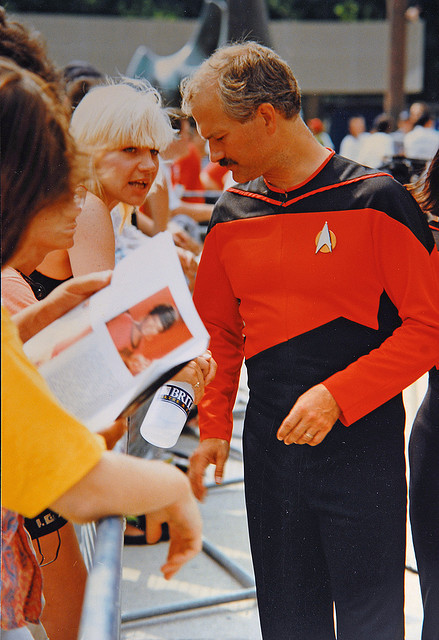
Yep, that's ol' Steve-o. Considering the fate of the long form census, looks like reality is still his pet peeve. Anyway, the others are just as completely hilarious, so click through to the end. I also think they need to add this picture, of Jack Layton at a Star Trek convention.


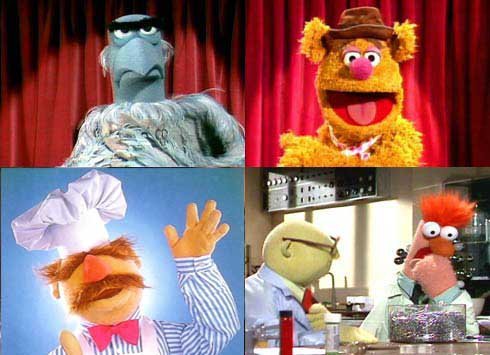
Also, the leaders as Muppets:


Speaking of childhood memories... do you guys remember Raffi? Because IT'S RAFFI OH MY GOD IT'S RAFFI!!!!!!!


So Decision Canada started with celebrity Stephen Harper hair makeovers, which are pretty funny, and then progressed to "Chicks with Michael Ignatieff Eyes," which is just really really weird. What are they going to do next, babies with Jack Layton mustaches?

A couple of neat things. If you're interested, the CBC has a comparison of campaign ads. Also, you should go check out Vote Lab, where you can cast a virtual vote to see how different result would be under an alternate electoral system such as mixed member proportional representation.

Saturday, April 16, 2011

Food for Thought

We're now in the second, post-leaders' debates, phase of this election campaign, and that's when things start getting nasty. Before they get do, some thoughts on the campaign so far.

Decision Canada compiled these Campaign Coles Notes, which are worth a read. I found them a bit too summary-ish and lacking in analysis, but that's what you get from Coles Notes. Which is why you should always read the actual book. Anyway. It mentions us (youth voters)!!!!!!!!!

There were a couple things I disagreed with. This one, for example, I found a bit fearmongery:

3. A Conservative minority might open other doors.

If Harper is held to a third minority, he will return to the nation's capital as prime minister. But for how long?

He has warned of a Liberal-NDP-Bloc Quebecois "coalition" government. A formal coalition, with New Democrats holding spots in a cabinet led by a Liberal prime minister Michael Ignatieff, will not happen. But Ignatieff does say Harper would need to "try" to gain the confidence of the Commons. Moreover, he says he is willing to "work" with other parties.

Translation?

A re-elected Tory government could be quickly defeated in the Commons. If Ignatieff receives a commitment from the NDP and Bloc to support a Liberal minority government, he could approach Gov. Gen David Johnston and ask to become prime minister without another election.

Constitutional experts say Johnston would be hard-pressed to say no.

I just want to put it out there that a coalition government isn't as evil as everyone seems to think it is. A lot of countries that have proportional representation, for example, are constantly ruled by coalition governments. A majority coalition is about as stable as a one-party minority, although a minority coalition government can be on shaky ground.

Everyone's acting like this is some crazy unprecedented thing, the idea that Ignatieff might ask the governor general to try to form the government. Um, no, it isn't. You know what was some crazy unprecedented thing? Harper going to ask the governor general to prorogue parliament in order to avoid potentially losing power.

As for Governor General David Johnston, he's a constitutional expert in his own right. I'm sure that if any constitutional matter comes up, he will deal with it admirably.

Anyway. The Coles Notes piece also mentions that "Harper is actually pleading for a majority to provide 'stability'" and that

This election is happening because the government was found by a majority of MPs to be in contempt of Parliament.

The Liberals hoped to make this a core election issue, blasting away at Harper for his obsession with control and disrespect for democracy.

There's no evidence the issue has caught fire yet — either because Canadians don't care, don't know enough, or are content with Harper.

This brings me to the next piece. Here's the core of it:

Liberal leader Michael Ignatieff displayed verve, agility and intelligence in both leaders' debates this week, but he won't win this election unless he undermines Stephen Harper's compelling, repeated promises to provide economic "stability."

It is a weak claim that should be easy to counter without overstating the case. Harper is no more solely to blame for the recession than he is primarily responsible for the recovery. But so far no one has laid a glove on the eerily imperturbable Conservative leader, with his hypnotist voice and bland expression.

Instead, Ignatieff has missed opportunities to challenge Harper's claims to economic invincibility by focusing obsessively on the prime minister's anti-democratic instincts and behaviour. We get that. It's scandalous and unacceptable -but a lot of voters care more about jobs, the cost of gasoline and taxes than what they see, wrongly or not, as petty infighting.

Those are the voters Ignatieff has to reach. He could begin by reminding them it was Liberal governments that created the wellregulated banking system Harper likes to boast about internationally -often in the face of criticism from anti-regulation zealots like the old Harper.

Then it basically tears apart the Conservatives' economic performance over the last few years. Which is what Ignatieff should probably be doing if he wants to win. It seems that by focusing on Harper's undemocratic actions--which I obviously think are very important--he's trying to win over right-leaning voters who don't particularly approve of Harper. But I think a better way to get hold of those voters would be to push the centrist thing--that the Liberal platform, if you look at it from an economic perspective, isn't too different from the Conservative platform. And also Stephen Harper and Jim Flaherty fail at the economy and Paul Martin wins at it.

Speaking of campaign promises, here are two handy resources from Decisions Canada: the interactive campaign-promise tracker, and the campaign promise reality check. Here's what all the parties have to say on education:

Conservative Party of Canada
  • Promise interest free student loans for part-time workers.
Liberal Party of Canada
  • Pledge $1 billion annually for high school students to attend university or trade school.
  • Pledges a Veterans learning benefit.
  • Pledges an Aboriginal learning benefit.
  • Wants language training for new Canadians.
New Democratic Party
  • Would create integrated, community based child-centred early learning and education centres.
  • Pledge more money to the provinces to lower tuition fees.
  • Would increase the education tax credit amount.
  • Plege increased funding to Canada Student Grants for marginalized groups.
  • Would invest $1 billion in Aboriginal education.

I was going to include the promises on employment issues, too, but they were really long and the Liberals and Greens were the only ones who have promised youth employment initiatives. But definitely go check it out! It's a great tool for comparing what the parties have to say on different issues.

As for the Reality Check, here's an excerpt from the one on the Liberal Passport to Education ("If you get the grades, you get to go!"):

Will the plan increase demand for post-secondary education?

It might, but there's no guarantee Canada's institutions can handle that. Universities are already turning away applicants, as they operate above capacity, and many university graduates have had trouble finding skilled work.

When government starts providing something that increases the demand, without increasing the number of seats, there are two main options, Milligan said: redistribute who gets the seats, or increase tuition fees.

"With the capacity constraint, quantity isn't going to budge. What will budge is the price," he said. "There will be more room for tuition fees to go up, since everybody has an extra $1,000 in their pocket."

Recently, for instance, some provinces increased their fees when the federal government introduced the Millennium Scholarship Fund.

All very good points, as those of us who are graduating and are now saddled with student debt know.

One last tidbit (I know, I know, this is already super-long!). Stéphane Dion is afraid that Conservative attack ads will do the same thing to Ignatieff they did to him. I don't have much to say about this, except that attack ads, honestly, turn me off. I've said before that we can, and should, hold our politicians to a higher standard of political discourse, and that starts with not voting for people who attack other people! But I agree that attack ads do seem to be strangely effective.

Friday, April 15, 2011

We're Not Props for Photo-Ops! Oh, ethnic tokenism.

On Wednesday a Conservative staffer sent around an email asking if there were any ethnic people in Etobicoke, and if so, could they come to Harper's rally in "national folklore costume." Oh yes. He went there.

Of course both Harper and the Etobicoke Center Tory candidate are distancing themselves from the incident, and the Grits are having a field day wandering around blustering about how people don't wear costumes, they wear clothes. I read somewhere that Ignatieff said something along the lines of, 'it's not national costume, it's national dress', which admittedly isn't much better. But I can't find that article so I'm going to assume it's a claim as unsubstantiated as the Helena Guergis attacks.

Anyway, in AWESOMENESS news, there was a counter-rally on Thursday. From the CBC:

A Facebook page formed after the email was leaked calls the email "patronizing and offensive" and invites people to participate in a counter-rally outside the Etobicoke event.

"Whether you're Chinese, Arab, Portuguese, Italian, South Asian, Irish, Vulcan, Klingon, Zombie, or Ewok. Let's show the Conservatives that "ethnic voters" are not props for photo-ops," the Facebook page says.

Salmaan Khan, a Ryerson student who helped organize the event, said he felt it was important to respond to the email.

"Personally, as a person of colour, I found the comments that were made in the email from the Conservative camp to be offensive," he said Thursday. "We are not ethnics, we are Canadians."

He said cultural garb is not necessarily a costume.

"But that's how they worded it, and I guess that's what we'll show up in."

Khan said he is not sure how many people will attend the event, or what they would wear — but he said some people are planning to come dressed as Conservative Leader Stephen Harper.

"We're not props for photo-ops!" Good slogan, no? Sounds like something you would chant at a rally.

Now I am not a member of a visible minority group, but according to some people I am a member of an ethnic group, so I get sensitive about these kinds of issues. The rally sounds like fun. If I were in Toronto area I might have showed up in my Dolce & Gabbana or whatever is "ethnic costume" for us "Eye-talian" ethnics. Probably leopard print.

Anyway, here is the story, with footage from the rally, on Global:

Thursday, April 14, 2011

The newest twitter celebrity

If you weren't watching/tweeting the debate last night you missed this woman:


Her name is Mme Paillé and she's asking about unemployment in those over 50. She herself is currently unemployed.

Well, of course, the leaders all spent the next 20 minutes trying to prove how their own platform planks would help poor Mme Paillé. The twitterverse was confused for a while, and then we realized that Mme Paillé was the "Joe the Plumber" everyman type for this election and "Mme Paillé" became the number 3 top trending topic in Canada. And then someone made a facebook fan page for her. The CBC has a collection of the best tweets.

Anyhow. The Journal de Montréal interviewed Mme Paillé for her reaction to the whole thing. She thinks Layton and Ignatieff did the best job at answering her initial question, and said Harper "had no empathy" for her situation.

Now people are offering her jobs over twitter but she's waiting to see if any come up in her area.

Oh, Mme Paillé. Hero of the people.

UPDATE: Because the CBC decided to post a new article five minutes after I posted this. So apparently there were about six facebook groups, one of which declared Mme Paillé the winner of the debate, and one of which declared her the new minister of labour. Not too shabby. Someone also suggested that she should be in charge of the next referendum.

Tuesday, April 12, 2011

If you weren't watching the NHL draft lottery you may have noticed there was a debate

So there was a debate. It was interesting. Actually, no, that's a complete lie. It was really, really boring. Except for when they yelled at each other. Stephen Harper didn't look directly at the camera or at the other leaders, stayed very calm, spoke in a patronizing tone, downright lied more than a few times, and said, "That's simply not true" a whole lot. Jack Layton was friendly, made some good points, called Harper out for having changed his ideals from when he first arrived in Ottawa, and basically turned out very well. Gilles Duceppe attacked Harper (his strategy this whole campaign), said a few things about Quebec that I could TELL the second came out of his mouth would be misinterpreted/misquoted, and got a bit angry which made his English a little bit sloppy. Michael Ignatieff did the best at bringing up youth issues, made some very insightful and incisive remarks about Harper's rule, and produced the most soundbites. Like he was basically speaking in soundbites. Very history prof. Obviously as a history student I approve, although he used a lot of what I call "essay words".

If there are awards, then Harper wins the one for cool-headedness. However he somehow managed to not really answer the questions put to him by the other leaders. He dismissed talk of his contempt charge, trust, and accountability, and shied away from talking about the Auditor General's report that he misquoted. He was also very dismissive and patronizing towards the other leaders, their platforms, and their points.

Jack Layton was definitely the most friendly and personable. Ignatieff called him "Jack" throughout the debate (maybe the other leaders did too but I didn't notice) and he somehow manage to seem more human and more normal than the other leaders. He also had a few good burns against each of the other leaders, especially Ignatieff's absence from the House of Commons and Harper's change of opinion since he came into power.

I personally love Gilles Duceppe, although he doesn't come across nearly as well in English as he does in French. I thought he seemed a little emotional in this debate--although I don't think that's necessarily a bad thing, the idea that we should have unemotional and therefore impartial leaders is kind of a fallacy. He absolutely ATTACKED Stephen Harper with the 2004 coalition agreement, which shouldn't be a surprise for anyone who's been following him so far. Unfortunately Duceppe's comments about multiculturalism not working in the Quebec context were misinterpreted. It's important to remember that Quebec's model of integration is different from the model of multiculturalism in the rest of Canada, but IS NOT ASSIMILATION. (Sidenote: as the daughter of an immigrant I personally feel that integration works better than multiculturalism. The problem with multiculturalism is that everybody cares so much about what piece of the cultural mosaic you come from when you just consider yourself Canadian.)

Michael Ignatieff WINS on youth issues and WINS on women's issues and WINS on immigration issues and WINS on sound-bite production. But he did get a little bit passionate--as I mentioned before NOT A BAD THING. Also he didn't have a good response to Layton's accusation that he's absent a lot from the House of Commons, or any of the accusations that his platform has a lot of the same holes in it as the Conservative one. And while Ignatieff may have won on youth and women's issues, by being the only leader to actually bring them up (other than gang violence), he really didn't say that much on them.

Anyway. I wish they would have covered some different issues, or at least not always let each question turn into the same argument over and over again. I also would have loved to see them scream insults at each other but maybe that's just me.

Memes! Duceppe, Harper, Layton.

Saturday, April 9, 2011

Looking Deeper

One of my favourite things about being a student is having all of these people, in a very small geographic area, learning about and becoming specialists in all sorts of different things. And then whenever you talk to people, they're all coming at the issue from very different perspectives and backgrounds.

"I'm actually not a fan of the Liberal platform," a friend of mine, majoring in Global Development Studies, mentioned recently. "It's so focused on numbers and money. A lot of social problems just can't be reduced to the economics of it."

I pointed out that the government's job is basically to allocate resources, so the money side of things is really all they can look at, beside making or changing laws. She shrugged.

"I just don't like this focus on the deficit. I feel like they're going to end up cutting programs that provide a lot of good services to communities. You know who's platform is really well thought out? The Green Party."

Fair enough.

Another friend, a business student, told me, "I was reading the Liberal platform, and I wasn't very impressed. They're so focused on getting rid of this deficit, they want to get rid of it too soon. Carrying a deficit isn't necessarily a bad thing. We're so used to hearing about the deficit in the 90's, which shouldn't have happened because our economy was in a good place. But when the economy is doing badly, being leveraged gives you a lot more flexibility."

She explained that worrying about keeping a balanced budget in tough economic times makes you afraid to spend, and the government should spend because it's easier for it to take a hit and go into deficit than it is for individuals to go into debt due to losing their jobs or not having the same social programs.

"The Conservatives are promising to get rid of it sooner," I said.

She rolled her eyes. "Their economic policy has always been for less tax, less spending, and whatever sounds good to the average person, who is not a trained economist. They're pandering to get the votes."

This post isn't intended to be for or against any particular party. I just want to encourage you to approach the party platforms critically, and talk about them with people who are coming from a completely different perspective. Discussion is healthy!

Thursday, April 7, 2011

I wish this meant tuition cuts, but I don't think it does


Transcript:

We all know the best way to ensure our kids get good jobs in the future, is to give them a great education today...but a university or community college education can be expensive. That's why the Liberal Plan will put four thousand dollars in a post-secondary savings fund for every high school student in the country. That's our message to young Canadians:
if you get the grades, you get to go. That's the Canada we want. That's the Canada you deserve.

Wednesday, April 6, 2011

Campaign Song Time!

New, better way to relate to political parties: which one shares your taste in music?

We all know by now that Stephen Harper is a John Lennon fan, and not too freaked out by Lady Gaga. However, his campaign song takes a bit of a different tone. (Better Now by Collective Soul--lyrics) Curiously, none of these artists is Canadian.


The Liberals cheat by having two different theme songs, which is actually very characteristic. Both from Canadian artists.

(Wingstock by Ashley MacIsaac)


(Jumpstart by These Kids Wear Crowns--lyrics)


The NDP don't have an official campaign song, but this has been played a lot at their rallies (by a Canadian alt-rock band). (Believe in Me by Sloan--lyrics)


Meanwhile, the Bloc have written their own song, "Parlons Qc". It has a bluesy/swingy feel, maybe a bit Neo-Trad, and was composed by the guitarist from Les Colocs.


Finally, the Green Party doesn't have an actual campaign song, but spoken word artist Winona Linn is awesome.


So, there you have it. Which party's song choice do you prefer?

On another note, I've always been partial to TROOPER's "Raise a Little Hell" for mobilizing voters, but since the theme of this election seems to be surprising everyone with a massive youth voter turnout, perhaps BTO's "You ain't Seen Nothing Yet" is more appropriate. (Lyrics.)

Tuesday, April 5, 2011

I like this candidate's style


All political ads should be this fun! I already like this guy so much more than if he'd tried to attack his opponents.

Monday, April 4, 2011

Grit vs. Tory: Youth and Student Issues

So the Liberals released their platform over the weekend, and the Conservatives are basing theirs on the budget that the House never voted on.  Here is a handy issue-by-issue comparison, if you're interested.  I mainly wanted to see who turned out better in youth issues and student issues, and the Liberals won this one.


POST-SECONDARY EDUCATION
Liberals:
- In year two, provide $1,000 each year to every university or college student, for up to four years. Low-income families get more ($1,500).
- Forgive $1,500 in student-loan debt for Canadians who volunteer with the Canada Service Corps.
- $200 million over two years for aboriginal post-secondary education.
Conservatives:
- Will allow Canadian students at foreign universities to qualify for existing tax breaks if their study term is less than 13 weeks.

Or, you know, the Liberals could just lower everyone's tuition by $1000.  Please please please?  

The Liberals also plan to provide incentives to medium-sized businesses who hire 18 to 25-year-old workers.  And then there's this, not strictly a youth issue but a student one: 

VETERANS
Liberals:
- Free tuition, up to four years of post-secondary or technical training, for veterans who've completed their service.
- Will review controversial lump-sum payment disability award.
Conservatives:
- Will put into effect a new Veterans Charter Act which expands eligibility for monthly allowances for seriously injured veterans and also boosts benefits.
RURAL
Liberals:
- $500 million to ensure 100 per cent high-speed Internet connectivity within three years.
- Student loan forgiveness for those who served in rural or underserved small towns: $8,000 per year (up to $40,000) for family doctors; $4,000 (up to $20,000) for nurses and nurse practitioners.
Conservatives:
- To attract health care workers to rural areas, Tories will forgive up to $40,000 in loans for new family doctors, and up to $20,000 for nurse practitioners and nurses.

So, yeah.  I would say the Liberals won this round in the youth vote race.